
Can a 2027 Kia Sorento PHEV Fully Recharge Overnight on a 240V Home Charger?
September 23 2026,
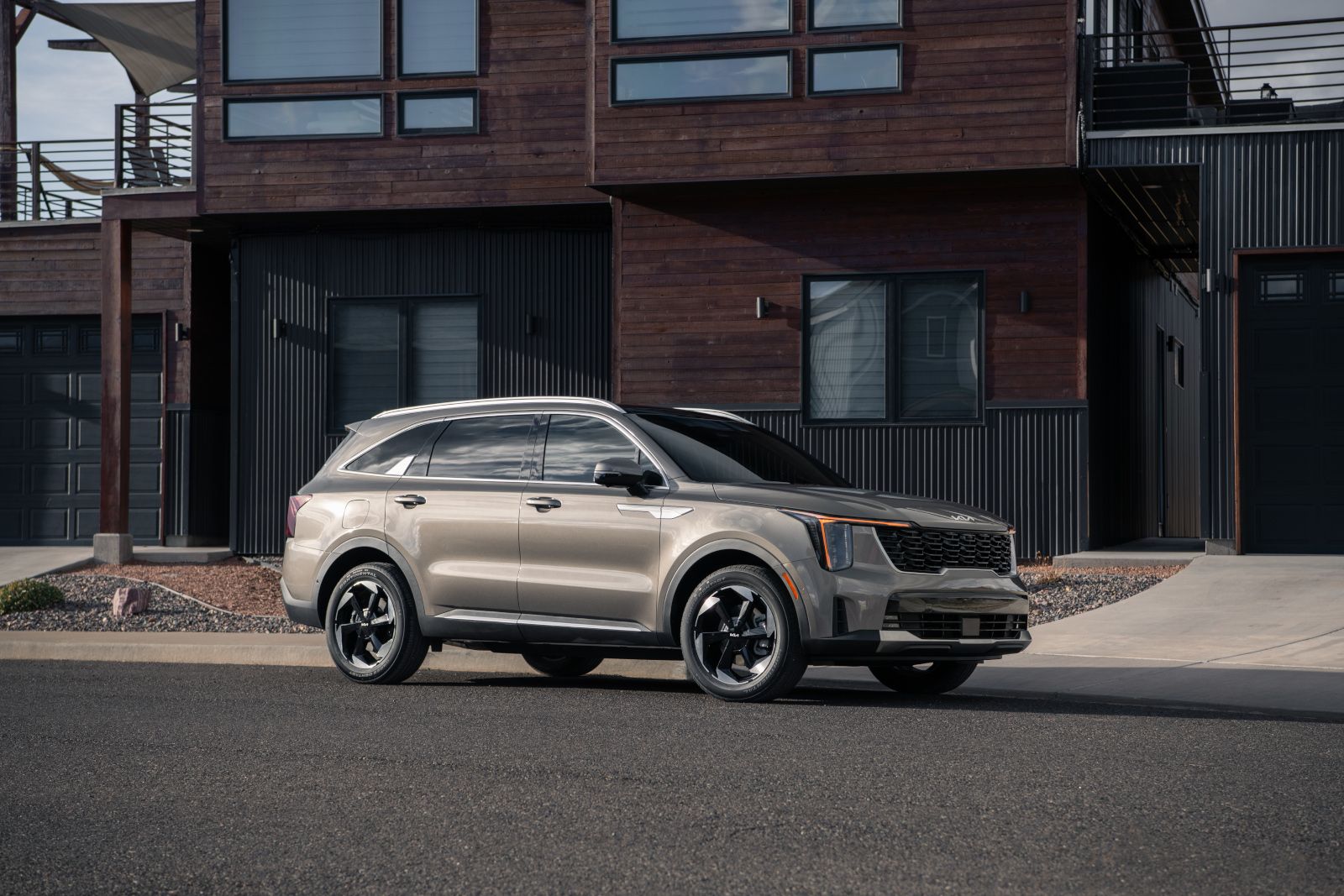
Charging a plug-in hybrid at home sounds simple until you start wondering how long it actually takes and whether your garage setup is even ready for it. If you’re weighing a 2027 Kia Sorento PHEV, this is the question that decides whether the plug-in routine fits your life.
The short answer: yes, easily. Here’s what that looks like night to night.
Does A 240V Charger Fully Recharge The Sorento PHEV Overnight?
Yes. The 2027 Sorento PHEV’s 13.8 kWh battery reaches a full charge in an estimated 3.8 hours on a 240V connection. Plug in after dinner, and the battery is topped up well before most households turn in for the night.
That 3.8-hour figure assumes a depleted battery and a stable 240V circuit. A typical overnight charging window, roughly eight to ten hours, gives generous room even if the battery isn’t fully drained when you plug in, or if conditions slow the charge slightly.
What’s The Difference Between Overnight Charging And The Vehicle’s Charge Time?
The 3.8-hour estimate is how long the Sorento PHEV needs, not how long it sits plugged in. Most owners simply connect it whenever the vehicle is parked for the evening, which is almost always longer than the charge actually requires.
That gap matters. It means occasional late starts, a partially charged battery from the day before, or a colder evening won’t threaten a full charge by morning.
How Much Electric Range Does A Full Charge Provide?
A full charge delivers an estimated 55 km of EV driving range. Combined with the Sorento PHEV’s 268 hp powertrain and 6.9 L/100 km gasoline-only fuel economy rating, that range covers a meaningful chunk of daily driving before the gas engine needs to contribute at all.
For school runs, grocery trips, and short commutes, 55 km often covers the whole day on electric power alone. Longer trips simply draw on the gasoline side once the battery is used up, with no separate charging stop required.
What Affects Real-World Charging Results?
Several factors shape how close you get to that 3.8-hour estimate:
- Home electrical setup: a dedicated 240V circuit performs differently than a shared or older one, and the vehicle’s own charge port and onboard charger set the ceiling.
- Starting battery level: plugging in with 20 km of range left charges faster than starting from empty.
- Temperature: cold evenings can slow charging slightly and affect how the battery discharges the next day.
- Charging habits: plugging in every night versus occasionally changes how much electric-only driving you actually get.
These variables mean two Sorento PHEV owners with the same charger can see slightly different results. Confirming your home’s electrical capacity with a qualified installer before delivery avoids surprises.
What Charging And Battery Features Help Manage The Routine?

The Sorento PHEV pairs with Kia Connect, which adds battery and charging status along with charging controls and schedule charging on top of the lineup’s standard remote features. That means checking charge level or setting a charging schedule from a phone, rather than walking out to the garage to check.
This matters more in a place like Newfoundland and Labrador, where an evening plug-in habit needs to be easy to maintain through changing weather and busy schedules. A dashboard or app check removes the guesswork.
How Is This Different From A Regular Hybrid?
The 2027 Sorento is also offered as a self-charging HEV, with a 1.49 kWh battery that never needs to be plugged in. It recharges through braking and the engine, with no charger, no cord, and no nightly routine.
The PHEV asks for a bit more from the owner, a charger, a routine, occasional attention to charge level, in exchange for genuine electric-only driving. The HEV asks for nothing extra but never drives on electricity alone.
Quick-Answer Summary
|
Question |
Answer |
|
Full charge time on 240V |
3.8 hours |
|
Battery capacity |
13.8 kWh |
|
Electric-only range |
55 km |
|
Overnight window needed |
A standard overnight window comfortably covers it |
|
Public charging required daily? |
No, home 240V charging supports daily use |
|
Charge monitoring |
Kia Connect battery/charging status and schedule charging |
Is Overnight Home Charging Realistic For Most Households?
For most driveway and garage setups, yes. The Sorento PHEV doesn’t need a public charging network to deliver its electric-first driving window; a single 240V home charger, used nightly, keeps the battery ready for commutes and errands without ever visiting a public station.
The household best suited to this routine is one that parks at home most nights and drives under roughly 55 km on typical days, school runs, errands, short commutes. A household that can’t count on a plug at home, or that regularly covers long distances with unpredictable parking, won’t see the same daily benefit and may be better served by the self-charging HEV.
Planning Your Sorento PHEV Charging Setup
Before committing to a PHEV, confirm three things: garage or driveway access for a charger, your home’s electrical capacity for a 240V circuit, and installation timing. These are practical planning questions worth working through with a dealer or licensed electrician ahead of delivery.
The 2027 Sorento PHEV brings a 13.8 kWh battery, 55 km of electric range, and a 3.8-hour full charge on 240V together into a plug-in routine that fits ordinary daily driving without leaning on public charging.
Visit Gander Kia in Gander to talk through charging setup, compare Sorento PHEV trims, and book a test drive that puts the plug-in routine, cabin space, and daily-family practicality to the test.
To learn more about the 2026 Kia Sorento PHEV, visit Kia.ca